Showing posts with label London. Show all posts

Wednesday, 30 November 2016

"Literary Links" - London is hell !!

"Literary Links" is a series of posts celebrating Britain's wonderful links with great authors, dramatists and poets.

The southern bank of the River Thames became a real den of vice and dissent.  The outcasts from the city gravitated to this area – some by choice to rub shoulders with other criminals and religious dissenters and others by force to spend time in squalid prisons like the Clink.


The Welsh Poet Tomas Prys (1564-1634) wrote a charming little poem called ‘London is Hell’ in which he compares Wales to Heaven and London as hell.   In his description he mentions these foul Southwark prisons by name and talks of the destitute inmates whose souls have been sucked out of them.
“there was no fear of hell but one: it is London”


A similar comparison was made by the poet Percy Shelley (1792-1822) who begins his poem Peter Bell the Third with the lines:
“Hell is a city much like London -  
A populous and a smoky city”


In another poem Shelley repeats this hell like theme with: 

“You are nowIn London, that great sea, whose ebb and flowAt once is deaf and loud, and on the shoreVomits its wrecks, and still howls on for more.”

This is an excerpt from the tour London River Walks - South Bank which explores the southern bank of the River Thames.  The full tour is found on  www.obelisktours.co.uk

Wednesday, 31 August 2016

"Literary Links" - Dickens and Fagin


"Literary Links" is a series of posts celebrating Britain's wonderful links with great authors, dramatists and poets.

Charles Dickens
The current Southwark Bridge was opened in 1921 and replaced a Georgian bridge from 1819.  When Charles Dickens was still a boy he regularly crossed this first bridge on his way to visit his father in Marshalsea Prison – a debtor’s prison located half a mile south of this point.  Young Charles was put to work in a blacking factory near to where Charing Cross station is.  One day a work colleague started walking home with him.  Dickens recalled:
“I was too proud to let him know about the prison; and after making several efforts to get rid of him, to all of which Bob Fagin in his goodness was deaf, shook hands with him on the steps of a house near Southwark Bridge on the Surrey side, making believe that I lived there.  As a finishing piece of reality in case of his looking back, I knocked at the door, I recollect, and asked, when the woman opened it, if that was Mr Robert Fagin’s house.”

His colleague is forever immortalised as the lovable rogue of Fagin in Oliver Twist.

This is an excerpt from the tour London River Walks - South Bank which explores the southern bank of the River Thames.  The full tour is found on  www.obelisktours.co.uk

Monday, 1 August 2016

"On the Road" - Florence Nightingale Museum

"On the road..." is a series of posts about our Discovery of Britain's highways and byways.  Whether it be some family fun, a surprising connection or just a beautiful spot we want to share our love for this country with you.  


Today we visit the Florence Nightingale Museum in London

Opposite the Houses of Parliament stands St Thomas' Hospital
St Thomas' Hospital
St Thomas’ was named after the martyr Thomas Becket (1118-1170), and was founded around 1173 – although it might have just been a rebranding of an older hospital from 1106.  The original hospital was located further down river and stood near the entrance to London Bridge.    Until the English Reformation (1539) the hospital was run by monks and nuns.

St Thomas' Hospital
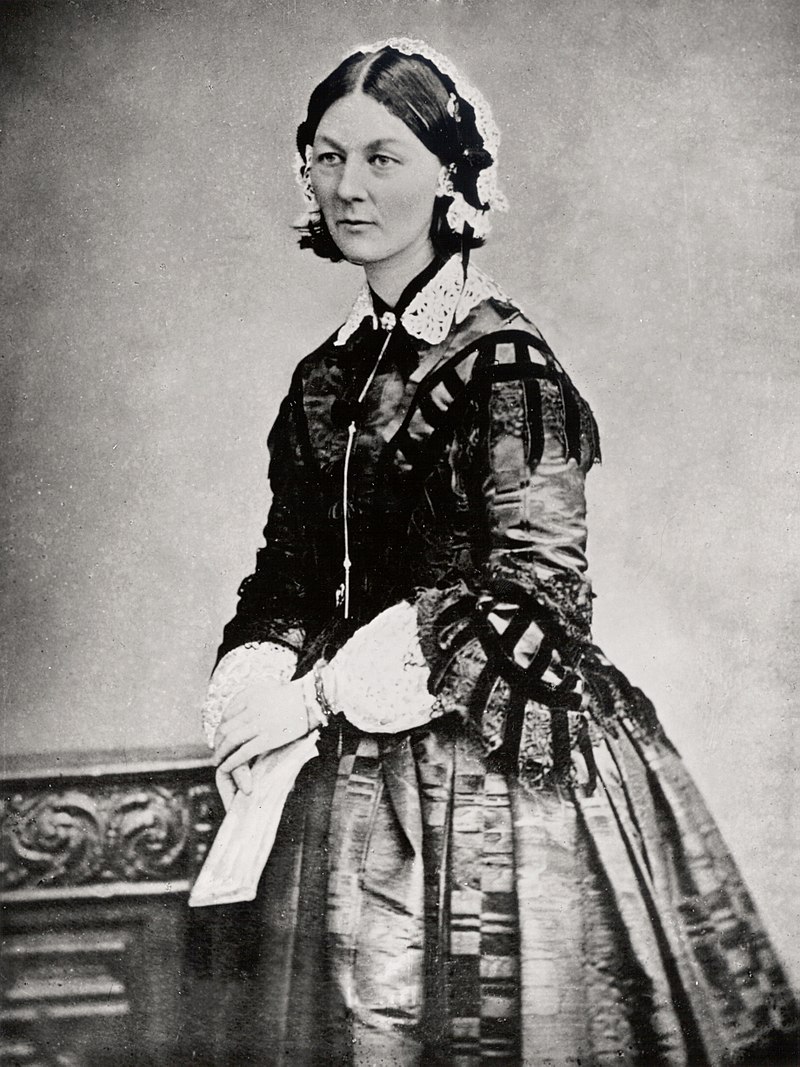
In 1855 Florence Nightingale (1820-1910) in the midst of her life changing experiences in the Crimea - resolved to reform the way nurses were trained.  Her popularity as the “Lady with the Lamp” resulted in impressive fund raising allowing her to found the Florence Nightingale School of Nursing at St Thomas’ in 1860.  

In 1862 the expanding railway network around London Bridge meant the whole hospital needed to move and relocated here.  The foundation stone for the new hospital was laid by Queen Victoria in 1868.    The modern 1975 buildings tend to blot out the more aesthetically pleasing Victorian buildings behind.   


The 1868 portion of St Thomas'

A museum honouring Florence's life and contribution to modern nursing is located just near the main entrance to the current hospital.    The museum contains books and artefacts relating to Florence and nursing including 'Athena' - Florence's bad tempered pet owl who she had stuffed on its death.  

Florence Nightingale three quarter length.jpg
Florence Nightingale
Florence felt her calling to nurse was the divine mission of her life.   She said,
"On February 7 1837 God spake to me and called me to His service."
Other notable quotes of hers include:
"I craved for something worth doing instead of frittering time away on useless trifles."
"When I am no longer even a memory, just a name, I hope my voice may perpetuate the great work of my life.  God bless my dear old comrades of Balaclava and bring them safe to shore."
"It  may seem a strange principle to enunciate as a first requirement in a hospital that it should do the sick no harm."


The area around the museum is explored in our self guided tour of River Walk - Lambeth.  The full tour is found on www.obelisktours.co.uk


Monday, 18 July 2016

"On the Road..." - London's iconic skate park

"On the road..." is a series of posts about our Discovery of Britain's highways and byways.  Whether it be some family fun, a surprising connection or just a beautiful spot we want to share our love for this country with you.  

Today we visit an iconic skate park in London. 

This southern riverside area is famed for its concerts and theatres, but this spot has also attracted a younger form of entertainment with the evolving of a Skate Park in the undercroft of the Southbank Centre.  For around forty years this undercover area has been the heart of London’s Skateboarders.  In 1976 the skateboarding craze arrived in force from America and this concrete jungle with its walls, slopes and stairs became the perfect place for youth to gather.  At its height around 1,000 skaters would practise along this river front on weekends.   To protect other Thames path users their activity was eventually confined to the undercroft area which became its spiritual home. 


Skaters can be regularly seen wheeling, twisting, jumping and surfing the walls with surprised tourists watching on as clusters of youth hang out and strut their stuff. This all-weather gathering spot is adorned with uncommissioned graffiti which serves as a perfect, colourful backdrop to the skating culture. 

Its irreverent colours, cryptic symbols and loud occupants seem, at first glance, to be unsuitable neighbours to opera, ballet, and theatre.  But this is a classic example of how this wonderful city can cater for all its contrasting ages and interests.  You can find little pockets of other worlds like this around the City. 

Their presence here has not always been welcomed by the Centre’s owners, who have gradually reclaimed a lot of the undercroft for storage.   Then in 2013 word spread that as part of a major upgrade to the area the owners planned to transform the skating area in to coffee shops and restaurants.   It appeared that an eviction was imminent, but this piece of skating heaven did not want to go.  They collected over 150,000 signatures from supporters. 

It has been hailed as an open space which should be protected.   The skate park may not have nice green lawns and pretty statues, but this graffitied, concrete playground is as much loved and cherished by its own unique community.   Supporters have called it the “epicentre of UK skateboarding”, “a sanctuary for skateboarders”, a “symbol of edginess and counter-culture”, “culturally and historically important”, “a free space for people to express themselves”, and “iconic”.


The non-skating purists view it as an eyesore, a waste of valuable commercial space and a carbuncle on the butt of humanity. 

Personally I like it.  Its raw edge jars you, but its youthful passion adds a vibrant touch to the concrete landscape.   To lose this unusual site would be the equivalent in their world to asking Westminster Abbey to relocate because the neighbouring politicians need more office space. 

After 18 months of petitioning and legal wrangling it was announced (September 2014) that the undercroft would be “open for use without charge for skateboarding, BMX riding, street writing and other urban activities".

It feels like an uneasy truce, but for now their skating space is safe.  

This is an excerpt from the tour London River Walks - South Bank which explores the southern bank of the River Thames.  The full tour is found on  www.obelisktours.co.uk

Wednesday, 29 June 2016

"Literary Links" - London - Waterloo Bridge


"Literary Links" is a series of posts celebrating Britain's wonderful links with great authors, dramatists and poets.

Charles Dickens
For some reason a number of suicidal Victorians chose Waterloo Bridge as their spring board into the eternities.   Charles Dickens made mention of these poor unfortunate souls as he approaches Waterloo with a night police patrol rowing on the Thames:
“Every colour but black seemed to have departed from the world.  The air was black, the water was black, the barges and hulks were black, the piles were black, the buildings were black, the shadows were only a deeper shade of black upon a black ground.   Here and there, a coal fire in an iron cresset blazed upon a wharf; but, one knew that it too had been black a little while ago, and would be black again soon.  Uncomfortable rushes of water suggestive of gurgling and drowning, ghostly rattling of iron chains, dismal clankings of discordant engines, formed the music that accompanied the dip of our oars and their rattlings in the rullocks.  Even the noises had a black sound to me …” 
   “There was need of encouragement on the threshold of the bridge, for the bridge was dreary… the river had an awful look, the buildings on the banks were muffled in black shrouds, and the reflected lights seemed to originate deep in the water, as if the spectres of suicides were holding them to show where they went down. “
He used these dark feelings in David Copperfield when Martha Endell  says, 
“I can’t keep away from it.  I can’t forget it.  It haunts me day and night.  It’s the only thing in all the world that I am fit for, or that’s fit for me.  Oh, the dreadful river!”
And in Oliver Twist he has Nancy declare,
“Look before you, lady. Look at that dark water. How many times do you read of such as I who spring into the tide, and leave no living thing, to care for, or bewail them. It may be years hence, or it may be only months, but I shall come to that at last.”
Thomas Hood from NPG.jpg
Thomas Hood
Thomas Hood (1799-1845) wrote a lengthy poem about a real young woman called Mary Furley who jumped in with her young child (1844).  The child died but Mary lived through the ordeal.  Hood relabelled Waterloo as “The Bridge of Sighs.”   The most famous section of the poem goes:
The bleak wind of March
Made her tremble and shiver;
But not the dark arch,
Or the black flowing river:
Mad from life's history,
Glad to death's mystery,
Swift to be hurl'd—
Anywhere, anywhere
Out of the world!
 In she plunged boldly—
No matter how coldly
The rough river ran—
Over the brink of it,
Picture it—think of it,
Dissolute Man!
Lave in it, drink of it,
Then, if you can! Take her up tenderly,
Lift her with care;
Fashion'd so slenderly,
Young, and so fair!

Anyone who did reclaim a body from the River would do well to take it to the southern side.  In Victorian times the Surrey officials would pay a crown for the corpse, whereas on the northern bank the stingy Middlesex officials only paid half a crown.  

This is an excerpt from the tour London River Walk - South Bank which explores the southern bank of the River Thames.  The full tour is found on   www.obelisktours.co.uk

Friday, 24 June 2016

"Now Picture That" - London - Westminster Abbey

"Now Picture That" is a series of posts which share old engravings and photos of Britain to help you imagine how things looked in times gone by.  


Image taken from an antique print of the west front of Westminster Abbey.   The street in front was known as   Tothill Street which was home to titled gentlemen such as the Bishop of Chester (1488),  Lord Dudley (1522), Lord Dacre, Sir George Carew (1612), Southern (the dramatic poet) and Edmund Burke.   The homes had extensive gardens, but both homes and gardens have now been swept away.  The area around this street has a wide and varied history including a military garden, a racecourse, a bear garden, bull baiting, and duels.

Drawn by Schnebbelie (fl.1803-1849).  Engraved by Ambrose William Warren (fl.1805-1856). Originally featured in "London; being an accurate history and description of the British metropolis" (London 1805-1809) by David Hughson (Pugh). 
The original image was a Copper line engraving on paper. 

Published by J. Stratford, 112 Holborn hill, June 8th 1805

The area around Westminster is explored in our self guided tour available to download to your phone or tablet today from www.obelisktours.com:
Parliament Square is surrounded by some of the great British institutions:  Parliament, The Church of England, The Supreme Court and HM Treasury.  This tour goes back to the roots of this area and uncovers layers of history from the time when Edward the Confessor first built his Palace here and upgraded a little monastery of Benedictine monks.    This is a place of high drama: of assassination and executions, of Royal scandal and glory, of coronations and state funerals, of monarchy against parliament – all set against a backdrop of inspiring architecture, of Sanctuary and commemoration.  
We cross the paths of historical favourites such as Guy Fawkes, Pirates, Richard the Lion heart, Unknown Warriors, and Winston Churchill.  

Friday, 10 June 2016

"Now Picture That" - London - Tower of London

"Now Picture That" is a series of posts which share old engravings and photos of Britain to help you imagine how things looked in times gone by.  
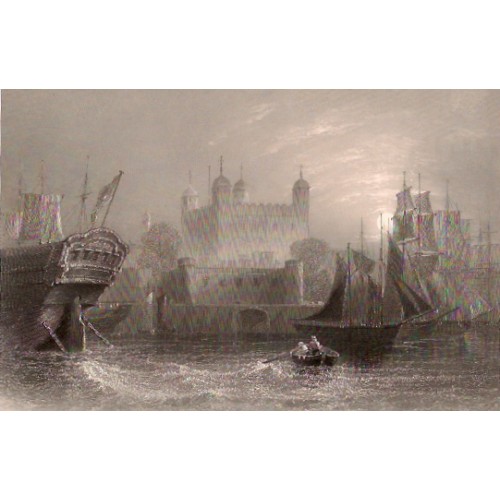
A very atmospheric image of the Tower of London by moonlight taken from an antique steel engraving print.  
Drawn by William Henry Bartlett.  Engraved by James Tibbetts Willmore A.R.A. (1800-1863).  The image was orginally used in the book "Ports, Harbours, Watering Places and Coast Scenery of Great Britain" (London : 1836-1842). 
London: Published by George Virtue, 26 Ivy Lane, 1842

The area around the Tower is explored in our self guided tour found via www.obelisktours.com
"This circular Walk explores the area around Tower Hill and around the outside of the Tower of London.    We discover a 1,825 year old wall, a nearly 950 year old palace, and a 146 year old tunnel.   This area just oozes with history and features in just about every British conflict you can imagine including The War of the Roses, The Reformation, The English Civil War, and The Jacobites.
We also explore what most visitors just walk pass without realising what is right under their noses.   We learn about Tubby Clayton, TocH, Execution sites, war memorials, escapes, sieges and ceremonies."

Tuesday, 31 May 2016

London - The Thames - Old Engraving


The tower on the left of the image belongs to St. Bride's Church which has been on this site since around the 6th Century.  Some of its most famous parishioners include John Dryden, John Milton and Samuel Pepys.   A popular tale indicates that its spire was the inspiration for the tiered wedding cake.    It is the second tallest of the churches created by Sir Christopher Wren after the Great Fire of London.  The first being St Paul's Catherdral which dominates the centre of the picture.
The Bridge shown is Blackfriar's Bridge (1769-1869) made from Portland Stone.

Drawn by Thomas H. Shepherd.  Engraved by William Wallis.
Original print was labelled: "London.  Respectfully inscribed to the Righ Honble.  The Lord Mayor , Court of Aldermen and Common Council.  Published March 31, 1827 by Jones & Co. 3 Acton Place, Kingsland Road, London."

Learn more about both sides of the river from two of our Thames Path tours.

The northern bank (left of the picture) is explored in the tour Blackfriars to Westminster:
"This is the second tour in our London River Walks following the Thames Path.  This tour is based on sewage….literally.  We will be walking on top of one of London’s greatest engineering feats – the Victoria Embankment which is in fact a huge sewer.
We wander from the putrid lost River Fleet to the majestic Westminster Bridge and find war Memorials for Submariners, and the Air Force, and a big ‘Thank You’ from Belgium.    We pass a notable Titanic victim, a forgotten Royal  Palace, a tram tunnel, “London’s Oldest Monument”, the beginning of the War of the Roses and the Year of the Great Stink.   Throw in some poetry from William Wordsworth,  Lord Byron, Rudyard Kipling and Alfred Tennyson and you have a perfect stroll along the river. "

The southern bank (right of the picture) is explored in the tour Southbank:
 This Thames Path River Walk follows the South Bank of the River from Westminster Bridge to London Bridge with great views of Parliament, the City, St Paul’s, and the Globe.  We explore some lesser known sites such as Jubilee Gardens, the Clink, and the blackness of ‘Ladies’ Bridge.    We look out to the River to learn how Londoners reacted to a frozen Thames, and learn of the Golden Hinde, Winchester Geese and Oxo. 
 Find both tours on www.obelisktours.com

Tuesday, 24 May 2016

London - Pool of London - Old Engraving


This image of the Port of London is taken from an original steel engraving from 1842.  It shows the Pool of London in the day when boats sailed right into the heart of London to trade.  In the distance the Tower of London stands prominently on the outskirts of the City.   A notable absence is the Tower's well known neighbour - Tower Bridge - which was not constructed until 1894.

By W.H. Bartlett and R. Sands
Published by Geo. Virtue, 26 Ivy Lane, London, 1842

The northern river front (left of the picture) is covered by two of our self guided tours:

  • Tower Hill
  • Tower to Blackfriars
And the southern river front (right of the picture) is covered in our river tour through Southwark.  

Find all three tours on www.obelisktours.com

Tuesday, 10 May 2016

London - Stationer's Hall - Old Engraving

Stationer's Hall was the home of the Worshipful Company of Stationers who regulated the printing trade for centuries.  They moved to this site in 1606 only to see the building and its valuable contents burnt to the ground in the Great Fire of London in 1666.  A new hall was constructed in 1673 which, besides an extension and an external facelift, is still the building standing today as depicted in this 1830 image.
Image labelled as: "Stationers' Hall, Stationers' Hall Court"
Original was drawn by Tho. H. Shepherd.  Engraved by W. Watkins.

Published by Jones & Co.  Temple of the Muses, Finsbury Square, London, Jan 9, 1830.

This important hall is featured in our FREE self guided tour of St Paul's Precincts found on  www.obelisktours.com

Tour Description:
"This FREE circular tour around St Paul’s precincts includes some of the history of the Cathedral (although does not go inside), but its main focus is to explore the Cathedral precincts bringing to life statues, archways, gardens, buildings and hidden corners.

Emerging from the shadows of history are memorials to the Blitz, John Wesley, and Thomas Becket.  We discover the founding of the YMCA, the home of the book burners, the extinction bell, and St Paul’s Cross.   Other curiosities include an ancient misplaced archway, a vanished market and a 150 million year old statue!"

Tuesday, 3 May 2016

London - St Paul's - Old Engraving


Original engraving labelled as: "St. Paul's Cathedral.  North Eastern View."
Drawn by Hablot Browne.  Engraved by B. Winkles for Winkles's Cathedrals.

Published London Oct 1, 1835 by Effingham Wilson, Royal Exchange.

You can explore all round the outside of this amazing building in our FREE tour of St Paul's Precincts.  

"This FREE circular tour around St Paul’s precincts includes some of the history of the Cathedral (although does not go inside), but its main focus is to explore the Cathedral precincts bringing to life statues, archways, gardens, buildings and hidden corners.

Emerging from the shadows of history are memorials to the Blitz, John Wesley, and Thomas Becket.  We discover the founding of the YMCA, the home of the book burners, the extinction bell, and St Paul’s Cross.   Other curiosities include an ancient misplaced archway, a vanished market and a 150 million year old statue!"

Tuesday, 19 April 2016

London - Thames Tunnel - Old Engraving


London - Thames Tunnel.  1834

This image is taken from an antique print of the Thames Tunnel - the first such tunnel to be built underneath a river.  Previous attempts had been made to tunnel under the Thames in 1799 and 1805, but both ventures failed.  Marc Brunel spearheaded another attempt in 1825 which, after numerous delays due to fire and flooding, was completed in 1843. 

To help finance the project visitors were charged a shilling a time to walk under the river and witness the construction.   Around 600 to 800 visitors made the descent every day.
  
The original plan was for horse drawn carriages to go underneath the Thames, but the long delay in completing the tunnelling meant there were no funds left to make the extensive ramps for each entrance.  It remained a pedestrian route and a tourist attraction until 1869 when it was converted to a train line.

The image is set within an engraved border with a City of London boat on top, columns on either side supported by classical figures, and tunnelling tools beneath.


Engraved by Henry Winkles (1800-1860).  Drawn by William Tombleson (fl.1824-1846). Originally published in "Tombleson's Views of the Thames and Medway" by Tombleson & Co., London 1834.

Find out more about this important area in our self guided River Walk from Rotherhithe through to Tower Bridge on www.obelisktours.com

Tuesday, 5 April 2016

London - St Paul's - Old Engraving


The original print reads: "St. Paul's Cathedral, The Western Front"
Drawn by J. Archer.  Engraved by B. Winkles for Winkles's Cathedrals.

Published Oct 1, 1835 by Effingham Wilson, Royal Exchange.

This impressive frontage is included in our FREE tour around the precincts of St Paul's Cathedral. 

"This FREE circular tour around St Paul’s precincts includes some of the history of the Cathedral (although does not go inside), but its main focus is to explore the Cathedral precincts bringing to life statues, archways, gardens, buildings and hidden corners.

Emerging from the shadows of history are memorials to the Blitz, John Wesley, and Thomas Becket.  We discover the founding of the YMCA, the home of the book burners, the extinction bell, and St Paul’s Cross.   Other curiosities include an ancient misplaced archway, a vanished market and a 150 million year old statue!"

Tuesday, 15 March 2016

London - Monument - Old Engraving


The Monument to the Great Fire of London.  

Published by J & F Harwood, 26 Fenchurch Street, London.

To find the story behind this monument and the surrounding area you can take a self guided tour via our tour app on www.obelisktours.com

Tuesday, 1 March 2016

London - St Pauls - Old Engraving


Original print is labelled as "St. Paul's Cathedral.  View of the Southern Front from Southwark Bridge."
Drawn by Hablot Knight Browne (famed illustrator for Charles Dickens and Harrison Ainsworth).  Engraved by B. Winkles (1801-1860) for Winkles Cathedrals.

London.  Published Sep 1, 1835 by Effingham Wilson, Royal Exchange

The area around the Cathedral can be discovered in our FREE tour around St Paul's Precincts available now on www.obelisktours.com

Tuesday, 9 February 2016

London - Buckingham Palace - Old Engraving


London - Buckingham Palace, c. 1860

The front of Buckingham Place in the mid nineteenth century from an 1860 print.  The grand archway with the flag flying on top is called Marble Arch which was built between 1827-32.  Originally the plan was to have sculpture all over the arch including a statue of George IV on the top.  Even though the sculptures were created the decision was made to keep the arch simple.  The sculptures found new homes inside Buckingham Palace, in the National Gallery, and the equestrian statue of King George stands on a plinth in Trafalgar Square.   The arch was moved in 1851 to its current location at the junction of Oxford Street and Park Lane (opposite Speakers' Corner, Hyde Park), and lends it name to the area and the Marble Arch underground station.

The image originally appeared in Thomas Dugdale's  "The Curiosities of Great Britain" (various editions between 1838 and 1860.)

Original print was labelled:  "The Queen's Palace, Pimlico.  Middlesex.  The Birth place of the Prince of Wales, born Nov 9, 1841 also of the Princes Royal, born Nov 21, 1840.

Friday, 8 January 2016

British Quotables - John Wesley

"Do all the good you can, in all the ways you can, to all the souls you can, in every place you can, at all the times you can, with all the zeal you can, as long as ever you can."

John Wesley  (1703-1791)
Anglican Cleric & co-founder of the Methodist movement


Tuesday, 22 December 2015

London Bridges


London, Southwark & Blackfriars Bridges
by W.H.Barlett & E.I.Roberts
From a steel engraving

This image is taken from a steel engraving of 1842.   London is shown in its Victorian glory where the only interruption to the skyline are churches and their steeples.  St. Paul's stands majestically above the whole city, and to the far right stands the monument to the Great Fire of London, both of which once offered visitors unbroken views across the city.  The nearest bridge is  London Bridge, followed by Southwark Bridge and Blackfriars Bridge in the distance.

All three of these bridges have now been replaced.

London Bridge is 'the' bridge of London.  There has been a crossing here since the Romans built a wooden structure to cross the river around AD 50.  The bridge depicted was opened in 1831, but due to subsidence had to be replaced in 1973.  The bridge illustrated in this engraving was purchased by Robert P. McCulloch who transported it to Arizona, USA for a new lease of life as the centre piece of a housing project and Tudor styled shopping mall.

The Southwark Bridge shown was built in 1819.  Its cast iron structure earned it the nickname of the 'Iron Bridge' and boasted the largest cast iron span in existense.   It was replaced by the current Southwark Bridge in 1913.

The nine arches of Blackfriars Bridge were built in 1769 out of Portland Stone.  It was originally named the William Pitt Bridge, but became commonly known after the Blackfriars area it connected to on the London side of the river.  A century later (1869) the current bridge replaced the one shown in this image.

The original image is labelled: "London, Southwark & Blackfriars Bridges From the Surrey Side of the River."
By W. H. Barlett & E.I.Roberts

These bridges and the southbank area are covered in greater detail in our tour of the Southbank on www.obelisktours.com  
Southbank Tour:  "This Thames Path River Walk follows the South Bank of the River from Westminster Bridge to London Bridge with great views of Parliament, the City, St Paul’s, and the Globe.  We explore some lesser known sites such as Jubilee Gardens, the Clink, and the blackness of ‘Ladies’ Bridge.    We look out to the River to learn how Londoners reacted to a frozen Thames, and learn of the Golden Hinde, Winchester Geese and Oxo. "
 

Friday, 2 October 2015

London - Mahatma Gandhi

Today, October 2, is Mahatma Gandhi's birthday.
As a mark of respect for this amazing man I thought you might want to pay your respects to him at an oft missed plaque in the St Paul's Cathedral precincts.


By the south gate of the Cathedral is a Friendship tree planted in honour of Mahatma Gandhi (1869-1948) – apostle of peace and non-violence.   It was just down the road from here that Gandhi arrived in 1888 to study law at the Inner Temple.  He studied, took dancing lessons, and joined the Vegetarian Society.  The most lasting impact of his English stay was an increased interest in religious thought.  


There are other tributes to Gandhi in the City... but those will have to wait for another day.

This is an excerpt from the FREE tour St Paul's Precincts found on www.obelisktours.co.uk

Tuesday, 30 June 2015

London - Whitehall - Craig's Court


Most visitors will be well aware of the Queen’s current residence at Buckingham Palace.  Likewise it is common knowledge that the Tower of London served as an historic home to Royalty.  What is not so well known is that over the centuries monarchy have also resided at Westminster Palace, St James Palace, Somerset House, Kensington Palace, and Bridewell Palace.  A bit further away from the centre of London you also have Richmond Palace, Nonsuch Palace, Hampton Court, Eltham Palace, Kew Palace and Windsor Castle. 

Our tour today is taking us through the area once known as the Palace of Whitehall which served as the main Palace between 1530 to 1698.   You will be walking where the British Royals dined, slept, played, and ruled.  Here you would have seen King Henry VIII, Edward VI, Mary I, Elizabeth I, James I, Charles I, Charles II, James II and William & Mary.    Whitehall Palace became a huge sprawling thing covering 23 acres with over 1,500 rooms stretching from near Downing Street up to where we are now standing.    


In 1698 a great fire destroyed the palace and forced Royalty to move, and so began a new era when desirable town houses began to rise from the ashes of the palace.   

Here in Craig’s Court, located on the boundary of the Palace, was one of the town houses that arose after the fire.   Joseph Craig  (d.1711) built this court and lived in one of the homes.   A number of distinguished residents and businesses settled in this quiet yard:  
  • ·         The Sun Fire Office had one of its main offices here (1726-1759).  They used the Sun symbol as its firemark, and metal ‘Fire Insurance’ sun  plaques were fixed to the front of properties of their customers.   The story is oft told that if their firemark was not displayed their private fire brigade would turn away and let the house burn.   While this may have happened they were more likely to extinguish the fire to prevent the threat to their own customer’s nearby properties and then charge other insurance companies if they put one of their fires out.    The Royal & Sun Alliance Group (RSA) are still insuring today.  
  • ·         Charles Stanhope, 3rd Earl Harrington (1753-1829) fought alongside General John Burgoyne in the American Revolutionary War whose surrender in 1777 was a turning point in the war.  Harrington moved into Craig’s court around 1780.  His son, the 4th Earl (1780-1851), was born here and became a Regency trendsetter whose fashion sense was copied by many including royalty.  He was rarely seen before 6 pm, had a room full of different teas, owned 365 snuff boxes, groomed a small, pointy beard, and would probably be described today as a bit camp.    
  • ·         Cox’s, the bankers to the British Army, had offices in Craig’s Court.  The bank was founded by Richard Cox (1718-1803) who was appointed as agent to the Foot Guards.  He was responsible for organising clothing, housing, weapons, and wages.   In 1765 he teamed up with Henry Drummond and by 1795 they were banking and arranging for 95 regiments of cavalry, infantry and militia.   The banking side of the business was taken over by Lloyds TSB (1923), and the travel side by Cox and Kings (1970). 
  • ·         In 1925 the Postmaster-General arrived in the court.  William Mitchell-Thomson, 1st Baron Selsden (1877-1938) was one of a long line of postmasters who had served in this position since 1517.   Between 1925 and 1928, under his leadership, the Post Office sunk huge investment into the creation of a telephone network.  Telephone Exchanges, like the one Selsden created in Craig Court, allowed customers to call directly without having to go through an operator.   Other services soon appeared including the Speaking Clock, 999 Emergency services and the iconic red telephone boxes.


·        
But this particular telephone exchange was a cut above the rest - it had to keep government communicating, so there is a lot more to this spot than meets the eye.    As we proceed through Whitehall we only see what is on street level, but beneath our feet is a whole maze of rooms and tunnels capable of holding thousands of people – many still guarded in secrecy for security reasons.  There are tunnels and rumours of tunnels – lots of conspiracy theories abound.    This telephone exchange was an essential hub providing vital communication links between government departments.   

During World War Two a 12 foot wide tunnel was dug deep in the ground to run from here to create a main thoroughfare right through to near Parliament Square and is referred to as ‘Q’, ‘Q Whitehall’ or ‘Post Office Scheme 2845.


More details about the people, places and events associated with these sites can be found on the tour London - Whitehall  available on   www.obelisktours.co.uk