Showing posts with label Oxford. Show all posts

Wednesday, 18 January 2017

"Literary Links" - T.S.Eliot in Oxford

"Literary Links" is a series of posts celebrating Britain's wonderful links with great authors, dramatists and poets.

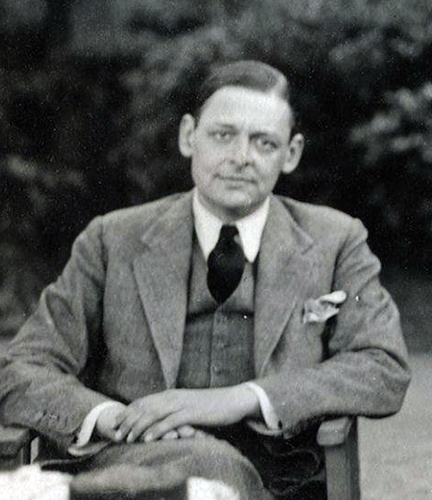
Thomas Stearns Eliot by Lady Ottoline Morrell (1934).jpg
T.S.Eliot


·         Thomas Stearns Eliot (1888-1965) was American born but arrived in Oxford in 1914 with a scholarship to study philosophy.  He was based at Merton College.

Merton College Library


  Oxford did not win him over and he was gone within a year claiming “I hate university towns and university people, who are the same everywhere, with pregnant wives, sprawling children, many books and hideous pictures on the walls… Oxford is very pretty, but I don’t like to be dead.”  However, England did win him over for in 1927 he became a British citizen.  His most famous works are The Love Song of Alfred Prufrock, The Waste Land, The Hollow Men and Old Possum’s Book of Practical Cats.  The latter was adapted by Andrew Lloyd Webber into the musical Cats.  

This is an excerpt from the tour Oxford’s Noble and Great Ones - Part 1  which explores around the southern part of Oxford.  The full tour is found on www.obelisktours.co.uk

Wednesday, 14 December 2016

"Literary Links" - Samuel Johnson in Oxford

"Literary Links" is a series of posts celebrating Britain's wonderful links with great authors, dramatists and poets.


·         Samuel Johnson’s (1709-1784) student days at Pembroke College in Oxford were cut short due to a shortage of funds.  He said, “Ah, Sir, I was mad and violent… I was miserably poor and I thought to fight my way by my literature and my wit: so I disregarded all power and authority.”   He was devastated at having to leave, but found his life’s calling as a writer.  His most notable work was A Dictionary of the English Language (1755) - a massive undertaking which took him nine years.  It would be another 150 years before the Oxford English Dictionary was introduced to take its place. 

This is an excerpt from the tour Oxford’s Noble and Great Ones - Part 1  which explores around the southern part of Oxford.  The full tour is found on www.obelisktours.co.uk

Wednesday, 23 November 2016

"Literary Links" - John Ruskin in Oxford

"Literary Links" is a series of posts celebrating Britain's wonderful links with great authors, dramatists and poets.

John Ruskin (1819-1900) attended Christ Church College, Oxford as an undergraduate and like many of his fellow students came from a privileged background.  He showed early signs of talent even before he arrived here.
Christ Church College, Oxford

His influence was enormous.  He became an accomplished poet, writer, artist and critic and an invaluable patron to the arts.   His thoughts on social issues were often ahead of their time and continue to inspire today. For instance, his book Unto This Last (1860) inspired Mahatma Gandhi who said, “I determined to change my life in the light of this book.  My belief is that I discovered some of my deepest convictions reflected in this great book of Ruskin’s…”


Ruskin was a generous benefactor to Oxford and founded The Ruskin School of Drawing in 1871 using the rooms and art in the Ashmolean Museum.  It continued there for a century where it was renamed The Ruskin School of Drawing and Fine Art in 1945.  In 1975 it found its new home here on the corner of the High Street and Merton Street.  In 2014 it became known as the Ruskin School of Art.  

This is an excerpt from the tour Oxford’s Noble and Great Ones - Part 1  which explores around the southern part of Oxford.  The full tour is found on www.obelisktours.co.uk

Wednesday, 9 November 2016

"Literary Links" - John Betjeman in Oxford

"Literary Links" is a series of posts celebrating Britain's wonderful links with great authors, dramatists and poets.

Sir John Betjeman (1906-1984).jpg
John Betjeman

·John Betjeman (1906-1984) came from a middle class family selling furniture.  As a boy he was taught briefly by T. S. Eliot and gained a love for words.  In Oxford his tutor was C.S. Lewis which sounds like a match made in heaven – but neither thought highly of the other.  But… supported by his travelling companion – a teddy bear called Archibald Ormsby-Gore – and armed with his love of the English language he acquired a growing appreciation of architecture and fell in love with Oxford.  Academically he failed, but his subsequent career was a delight.  He wrote guidebooks, co-founded the Victorian Society, composed poems, campaigned to save buildings, and became a television personality. 

This is an excerpt from the tour Oxford’s Noble and Great Ones - Part 1  which explores around the southern part of Oxford.  The full tour is found on www.obelisktours.co.uk

Wednesday, 19 October 2016

"Literary Links" - Oscar Wilde in Oxford

"Literary Links" is a series of posts celebrating Britain's wonderful links with great authors, dramatists and poets.


·         Oscar Fingal O’Flahertie Wils Wilde  (1854-1900) found a confidence in Oxford that ignited him.  He was a brilliant student but craved an audience to perform to.  Oxford’s ancient walls had served their preparatory purpose, but now he yearned to break out and please the world.  He became a playwright, novelist, essayist, poet and wit.  Some of his more well known works include The Picture of Dorian Gray (1891), An Ideal Husband (1895) and The Importance of Being Earnest (1895).  He was prone to shock, and was imprisoned for being homosexual (1895).  He said, “The two great turning points of my life were when my father sent me to Oxford, and when society sent me to prison.”   He continued to love Oxford:


“I envy you going to Oxford: it is the most flower-like time of one’s life.  One sees the shadow of things in silver mirrors.”
 “In spite of the roaring of the young lions at the Union, and the screaming of the rabbits in the home of the vivisect, in spite of Keble College, and the tramways, and the sporting prints, Oxford still remains the most beautiful thing in England, and nowhere else are life and art so exquisitely blended, so perfectly made one.”


This is an excerpt from the tour Oxford’s Noble and Great Ones - Part 1  which explores around the southern part of Oxford.  The full tour is found on www.obelisktours.co.uk

Wednesday, 7 September 2016

"Literary Links" - Christ Church Authors

"Literary Links" is a series of posts celebrating Britain's wonderful links with great authors, dramatists and poets.

Christ Church College in Oxford has its fair share of famous alumni including three notable wordsmiths: Dorothy Sayers, W.H.Auden and Richard Curtis.


·         Dorothy Sayers (1893-1957) was born at Christ Church!  Her father, Reverend Henry Sayers was the chaplain and headmaster of the Choir School.  Dorothy returned as a young woman to be educated at Somerville College, and was one of the first women to receive a degree from Oxford.    Dorothy was an avid writer, but is best remembered for her murder mysteries featuring the amateur sleuth Lord Peter Wimsey.


·         Wystan Hugh Auden (1907-1973), more commonly known as W.H.,  arrived to study biology, but soon switched to English Literature.  A wise move for that is where his future was heading.   With his monocle and cane he wandered Oxford’s streets lapping up the student life, enjoying good food, music, sports and conversation.  He published hundreds of poems, essays and reviews.  Although he eventually settled in America he returned for three weeks each year between 1956-1961 to lecture as Professor of Poetry at Oxford University.


·         Richard Curtis (1956-  ) studied English Language and Literature, and his love of words has entertained us ever since.   Richard met Rowan Atkinson in Oxford drama clubs and they created Blackadder and Mr. Bean.  His pen went on to write or adapt numerous films and TV series including  the Vicar of Dibley,  Spitting Image, Four Weddings and a Funeral, Notting Hill, Bridget Jones’s Diary, Love Actually and War Horse. 


This is an excerpt from the tour Oxford’s Noble and Great Ones - Part 1  which explores around the southern part of Oxford.  The full tour is found on www.obelisktours.co.uk

Wednesday, 17 August 2016

"Literary Links" - Harry Potter in Oxford Part 2

"Literary Links" is a series of posts celebrating Britain's wonderful links with great authors, dramatists and poets.

The Harry Potter movies also used Oxford locations in the Divinity School and in New College.

The Divinity School is another of Oxford's great medieval masterpieces with its impressive vaulted roof built between 1427 – 1483.  Beneath this roof is where students once debated with their masters to earn their degrees.   


Harry Potter fans will recognise the Divinity School as both the Hogwarts Hospital and the dance hall where Professor McGonagall attempts to teach the students how to dance.  The ancient library above is used by Harry, Ron and Hermione to find out details about Nicholas Flamel and Polyjuice Potion.  


The cloisters of New College, with the huge tree in the middle, served as the setting for a number of Harry Potter scenes.  It was here that Mad Eye Moody turned Malfoy into a ferret, where pupils wear ‘Potter stinks’ badges, where Harry shares the secret with Cedric Diggory that their first challenge was dragons, and where Harry calls Ron a ‘git’.


This is an excerpt from the self guided tours of Oxford’s Noble and Great Ones.  
The Divinity School is found in Tour Three.
New College is found in Tour Two
The full tours are found on www.obelisktours.co.uk

Wednesday, 3 August 2016

"literary Links" - Harry Potter in Oxford

"Literary Links" is a series of posts celebrating Britain's wonderful links with great authors, dramatists and poets.

A number of Christ Church College locations were used for filming the Harry Potter movies.  
The old cloisters provided the backdrop to Harry being shown his father’s Quidditch trophy.   


The stairway up to the Dining Hall was used as the entrance to Hogwarts where Professor McGonagall informs the new students they are about to be sorted into their houses.  Christ Church decided to not use the Sorting Hat for the selection of their students.  Two other scenes were filmed on this staircase: when Filch, the caretaker, catches Harry and Ron arriving late, and when Harry has a flashback of Dumbledore talking to Tom Riddle.


Even though the Dining Hall was not used for filming it was the inspiration for the Hogwarts’s main hall.  You can easily imagine floating candles, moving pictures, flying owls and hurrying ghosts. 


More Harry Potter, Oxford locations in our next post...

This is an excerpt from the tour Oxford’s Noble and Great Ones - Part 1  which explores around the southern part of Oxford.  The full tour is found on  www.obelisktours.co.uk

Monday, 25 July 2016

"On the Road" - Rhodes Scholars


"On the road..." is a series of posts about our Discovery of Britain's highways and byways.  Whether it be some family fun, a surprising connection or just a beautiful spot we want to share our love for this country with you.  

Today we visit Oxford to discover more about Rhodes Scholars

Cecil Rhodes ww.jpg
Cecil Rhodes
Cecil John Rhodes (1853-1902) was English born, but made his wealth and life in South Africa.  He attended Oriel College and loved the University.  He had a very Victorian world view of the British Empire and said "I contend that we are the finest race in the world and that the more of the world we inhabit the better it is for the human race.”   He also said “Remember that you are an Englishman, and have consequently won first prize in the lottery of life.”
Rhodesia was named after him (1895), but in Oxford his best legacy is the Rhodes scholarship which has funded over 7,000 students since 1902.

At the end of South Parks Road in Oxford is the Rhodes House.


In his will Cecil Rhodes created a scholarship programme (1902) which has now assisted over 7,000 international students to come to Oxford.  He felt the university would have a civilising effect and would contribute to world peace.   He said, “Wherever you turn your eye – except in science – an Oxford man is at the top of the tree.”

The list of recipients and their accomplishments is impressive and carry on Rhodes desire to “render war impossible.”

Above the front door is a carved ship with the British lion and the American eagle on the sails.   This is symbolic of Rhodes initial plan for 60 English speaking scholarships from the British Colonies plus another two scholarships for each American state.  There were a further 15 scholarships for Germany.


  The latter might seem an odd non-English connection, but at the time Rhodes had been impressed not only by Germany's might but also that their emperor had made English a compulsory language in German schools.  How his heart would have sank to see what happened during the world wars.  German Rhodes scholars were stopped twice during those two conflicts.  In 1977 women were allowed to apply for the first time and in 1993 countries from the European Community could also apply. 

During their stay Rhodes students are assigned to a College but are also entitled to the use of Rhodes House (1928) which includes facilities such as a Library, study area, and gardens.  It was here that Albert Einstein gave his noted lectures (1931), and where Tony Blair’s band Ugly Rumours played (1970s).  Somehow those two events don’t seem like they should be sharing the same sentence. 
A number of countries have reciprocated in kind by establishing similar scholarships for British students to come to their countries. 
Fulbright.jpg
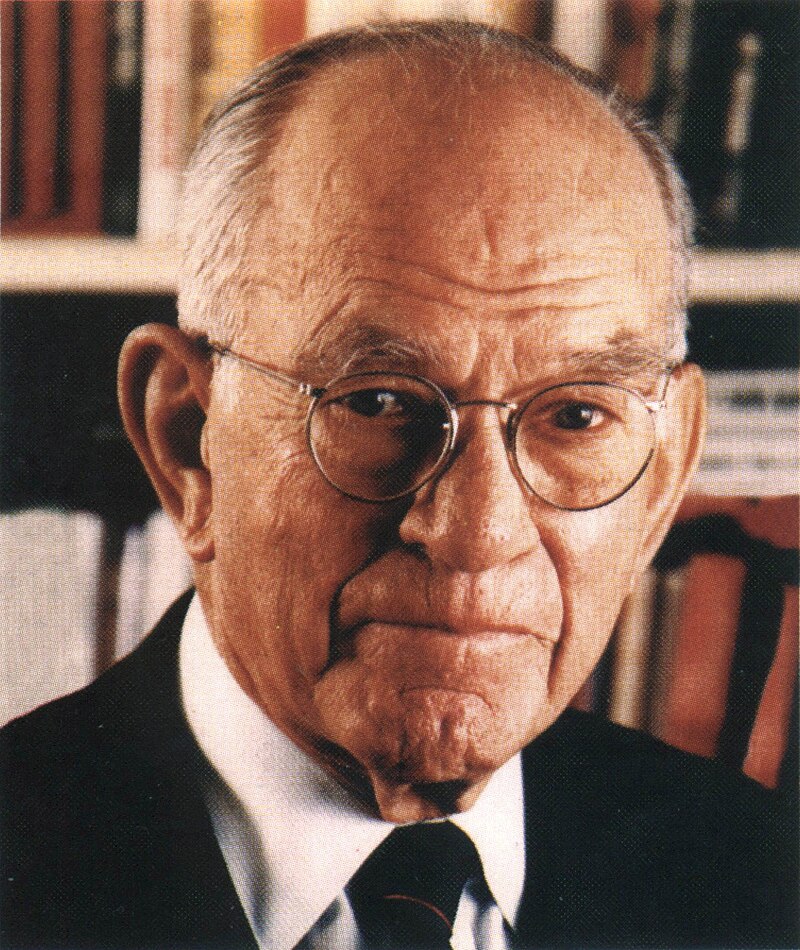
James Fulbright
Rhodes' influence has had an interesting side effect.  One recipient was James William Fulbright (1905-1995) who arrived in Oxford as a Rhodes Scholar – a privilege that he never forgot and emulated.  He was the brainchild behind The Fulbright Program which provides around 8,000 grants annually for students to study in other countries – specifically for United States students to study abroad, and for other countries, in return, to study in America.  Fulbright explained his hopes:

“The Fulbright Program aims to bring a little more knowledge, a little more reason, and a little more compassion into world affairs and thereby increase the chance that nations will learn at last to live in peace and friendship.”

This is an excerpt from two tours:
Oxford’s Noble and Great Ones - Part 1  and
Oxford’s Noble and Great Ones - Part 2  
The full tours can be found on www.obelisktours.co.uk

Wednesday, 15 June 2016

"Literary Links" - Mr Toad in Oxford

"Literary Links" is a series of posts celebrating Britain's wonderful links with great authors, dramatists and poets.


Last Thursday we highlighted that two of Oxford's famous Inkling group were buried in the Holywell cemetery of St Cross Church - namely Charles Williams and Hugo Dyson.   They are not the only famous literary figures to have been buried here.  


The graveyard is quite an atmospheric spot  The Church may date to around AD 890, but the first mention seems to be 1100.  The buildings date from the 12th  century onwards.  Just near the church was a Holy Well, from whence the church and nearby Holywell Street gain their name.  Buried in this ancient spot, surrounded by long grass and wild flowers is Kenneth Grahame

The tomb of Kenneth Grahame 1859-1932
  As a young boy Grahame attended school in Oxford and dearly wanted to go to the University, but the cost was considered too great and he ended up with a career at the Bank of England (1876).  He loved writing and is the author of the classic story Wind in the Willows.  The public appeal of  Rat, Mole, Badger, and Toad was not realised until after his death. 

Grahame’s only child, Alistair, was an undergraduate at Christ Church College in Oxford - thus fulfilling his father's own childhood dream.  Alistair was an unruly child and was immortalised in Wind in the Willows as Mr Toad.   Mr Toad sang the following:
The clever men at Oxford
Know all that there is to be knowed.
But they none of them know one half as much
As intelligent Mr Toad
 Quite tragically Alistair committed suicide while still a student.  

This is an excerpt from the tour Oxford’s Noble and Great Ones - Part 2  which explores the streets of Oxford.  The full tour is found on www.obelisktours.co.uk


Wednesday, 8 June 2016

"Literary Links" - The Inklings in Oxford

 "Literary Links" is a series of posts celebrating Britain's wonderful links with great authors, dramatists and poets.

Many Oxford visitors will make a pilgrimage to the Eagle and Child pub, but there are a couple of other sites they should really include as well.  


The Eagle and Child is a seventeenth century pub most famously known as the meeting place of the Inklings – a small literary group which included C.S. Lewis and J.R. Tolkien.  Here they would gather every Tuesday morning for 23 years to share a chapter, a poem, a line, a plot with their friends.  Here they would discuss, drink, debate and discover.  A beer in one hand and a smoke in the other made this as comfortable as any hobbit hole.   Here the deeds of Sam and Frodo or Prince Caspian and Aslam gradually evolved and came to life.  C.S. Lewis once said to Tolkien “If they won’t write the kinds of books we want to read, we shall have to write them ourselves.”  


There are couple of other sites worthy of adding to any inklings fan's itinerary.

To the side of the University Church of St Mary the Virgin, down St. Mary’s Passage is a little bit of Narnia.  There is a door facing St Mary’s church which has a local legend attached to it - the following story may be no more than an urban legend, but even if it is not true it should be!

The story goes that C.S. Lewis came out of the western doors of the church, bumped his head and as he steadied himself came face to face with a carved door in the middle of which is a Green Man, symbolic of rebirth, and looking very lion like.

The 'Narnia' door on the left, and St Mary's Church on the right.
The Radcliffe Camera is in the background.
 Above it he saw two carved fawns in the canopy and, as he turned towards Radcliffe Camera, saw a lamppost.  So, it is claimed, was he introduced to Aslan the Lion, Mr Tumnus the Faun and the lamppost which all featured in The Lion, the Witch and the Wardrobe.


Two fawns guarding the Aslan door, and the lampost in the distance.
Our next stop is Holywell cemetery surrounding St Cross Church to visit the tombs of Charles Williams and Hugo Dyson. 

The tomb of Charles Williams (1886 - 1945)
William's name does not usually register with most visitors.  However, he was another member of the inklings group that met to share their works and thoughts.  The group could average as many as ten regulars plus a handful of occasional visitors, but Williams influence was such that he is sometimes referred to as "The Third Inkling".  He had been hired by the Oxford University Press as a proofreading assistant and eventually became an editor. He was mainly a novelist and his writings influenced Dorothy Sayers, T.S. Eliot and W.H. Auden.  His tombstone remembers him as 'Poet'.  One of his greatest fans and friends was C.S. Lewis.  Some reviewers believe that Aslan the lion in the Chronicles of Narnia, was based on the lion who appeared in Williams’ book The Place of the Lion.


Also buried in this cemetery is a lesser known inkling called Hugo Dyson.  He was a much loved lecturer at the University and he thoroughly enjoyed the weekly meetings at the Eagle and Child.  He did acquire a distaste for Tolkien's orcs and elves, and his obvious dislike actually stopped Tolkien from sharing much of his Lord of the Rings with the group.  Oh to be able to switch places with Dyson and to hear and encourage the tales of Middle Earth from the mouth of their creator.  Dyson along with Tolkien, was a key influence in converting C.S. Lewis to Christianity.
The tomb of Hugo Dyson 1896-1975

All these inkling sites are included in our self guided tours of Oxford on www.obelisktours.com

  • The Narnia door is included in Oxford's Noble and Great Ones Tour Two
  • Holywell Cemetery is in Oxford's Noble and Great Ones Tour Two.
  • The Eagle and Child is included in Oxford's Noble and Great Ones Tour Three.


Thursday, 30 July 2015

Oxford - Magdalene College

This is an excerpt from the tour Oxford’s Noble and Great Ones - Part 1  which explores around the southern part of Oxford.  The full tour is found on   www.obelisktours.co.uk


 Facing the Botanic Gardens is Magdalen College.  The first surprising thing about this college is its spelling.  You would expect it to be pronounced like Mary Magdalene when in fact it is ‘Maudlin’.  Some claim it is just how it was pronounced centuries ago without the ‘g’, but it also seems we have a play on words here.  Mary Magdalene anointed the feet of the Saviour, was present at the Crucifixion and at the tomb and most artistic depictions show her looking sorrowful.   Maudlin is a word meaning tearful or sentimental. So we get both an historical figure and an emotion in one word - two for the price of one.


William of Waynflete (1398-1486), Bishop of Winchester, founded “Seint Marie Maudeleyn Halle” in 1448, but it was not until 1456 that he gained the current location and Magdalen College came to life in 1458.  Magdalen was blessed with benefactors from the start.  One of the earliest gifts came from the estate of John Fastolf (1380-1459), who may be the inspiration for Falstaff featured in William Shakespeare’s plays.


The College has 100 acres of grounds which includes a herd of Fallow Deer.
The Tower greets everyone entering Oxford.  It was built by William Orchard (1468-1504) who also designed the quad behind the tower, the vaults of the Divinity School, and the chancel of Christ Church Cathedral.  It has been a tradition for the college choir to sing from the top of Magdalen tower at 6 am on May Day (May  1).  The event draws large crowds and is followed by dancing and music in the streets below.  


More details about the people, places and events associated with these sites can be found on the tour Oxford’s Noble and Great Ones - Part 1 available on   www.obelisktours.co.uk

Thursday, 23 July 2015

Oxford - the Horror of Cricket

This is an excerpt from the tour Oxford’s Noble and Great Ones - Part 1  which explores around the southern part of Oxford.  The full tour is found on   www.obelisktours.co.uk


No sport seems more ‘English’ than cricket, and no cricket ground has a more perfect setting than the one in Merton field alongside the Christ Church meadow.  However, when it was first proposed Charles Lutwidge Dodgson (Lewis Carroll) was horrified that the meadow should be sacrificed for the sake of one sport.  He wrote a poem about this; the first stanza reads:

Amidst thy bowers the tyrant’s hand is seen,
And rude pavilions sadden all your green;
One selfish pastime grasps the whole domain,
And half a faction swallows up the plain;
Adown thy glades, all sacrificed to cricket,
The hollow-sounding bat now guards the wicket.
Sunk are thy mounds in shapeless level all,
Lest aught impede the swiftly rolling ball;
And trembling, shrinking from the fatal blow,

Far, far away thy hapless children go. 


More details about the people, places and events associated with these sites can be found on the tour Oxford’s Noble and Great Ones - Part 1 available on   www.obelisktours.co.uk

Thursday, 16 July 2015

Oxford in Wonderland

This is an excerpt from the tour Oxford’s Noble and Great Ones - Part 1  which explores around the southern part of Oxford.  The full tour is found on   www.obelisktours.co.uk

A famous literary connection with Christ Church is with Charles Lutwidge Dodgson (1832-1898) more commonly known as Lewis Carroll the author of Alice’s Adventures in Wonderland.  Some of his characters have been put in the Great Hall’s stained glass windows.  If you look carefully you can see characters like Alice, the Dodo, the White Rabbit, the Queen of Hearts, the Knave, the Turtle, Tweedledee and Tweedledum.

Charles Dodgson began his residence here in 1851 and stayed until his death in 1898.  His subject was maths and he delighted in creating mathematical and word puzzles.  He lived to the side of Tom Tower where he also developed his interest in photography.

He compiled the Alice stories while entertaining the three daughters of the College Dean Henry George Liddell – Lorina (6) Alice (4) and Edith (2).   Over the years their friendship grew and the stories began to form. The girls’ names appear a number of times in the story.  At the Mad Hatter’s tea party the dormouse tells a story:
`Once upon a time there were three little sisters and their names were Elsie, Lacie, and Tillie; and they lived at the bottom of a well--'  
Elsie is Lorina Charlotte or LC, Lacie is an anagram of Alice and Tillie was Edith’s nickname. 
The story of Alice came to life on a boating trip with the three girls – an event which is included in the tale and featured everyone present:
“the pool was getting quite crowded with the birds and animals that had fallen into it: there was a Duck and a Dodo, a Lory and an Eaglet, and several other curious creatures.”
Alice was Alice, The Duck was Reverend Robinson Duckworth, The Dodo was Charles Dodgson, Lory (a type of parrot) was Lorrie  and Eaglet was Edith. 

“Curiouser and curiouser!”

Other actual & possible Inspirations for his stories and characters abound including the elongated fire dogs in the Dining Hall for when Alice grew and grew; the hidden Dining Hall door for the White Rabbit’s escape hole; Dean Henry Liddell as the “I’m late, I’m late” white rabbit,  Theophilus Carter - an Oxford cabinetmaker - as the Mad Hatter, opposite Christ Church is a shop on Aldate street which was used for the knitting ‘sheep’ shopkeeper, the Binsey Treacle (healing) Well features in the Dormouse’s story, and Henry VIII’s portrait in the dining hall probably inspired the Queen of Hearts favourite words “Off with their heads”. 


More details about the people, places and events associated with these sites can be found on the tour Oxford’s Noble and Great Ones - Part 1 available on   www.obelisktours.co.uk

Thursday, 9 July 2015

Oxford - Botanical Garden

This is an excerpt from the tour Oxford’s Noble and Great Ones - Part 1  which explores around the southern part of Oxford.  The full tour is found on   www.obelisktours.co.uk


The front gate of the University of Oxford Botanic Garden provides us with some clues to its founding.  The Latin inscription above the gateway reads:
“To the Glory of God Almighty and the greatest Honour of King Charles, Henry Earl of Danby gave this garden for the use of the University and the state.  1632.”
(Gloriae Dei Opt. Max. Honori Caroli Regis, in usum Acad. et Reipub. Henricus comes Danby DD. MDCXXXII.)
The bust of Henry Danvers 1st Earl of Danby (1573-1643) sits above the inscription.  He gave five acres of land in 1621 to “promote the furtherance of learning to glorify nature “and this gateway was added in 1632 by the famous architect Inigo Jones (1573-1652).  On either side are statues of Charles I and Charles II which make this gateway look similar to Temple Bar in London – also designed by Inigo Jones ”.


Jacob Bobart became the first custodian of the garden (1642), and his son (also Jacob) sent a list of every plant they owned to other botanical gardens with the hopes they could exchange seeds. This is a practise continued by Botanical gardens worldwide. Over the past four centuries various guardians have kept the botanical studies alive and relevant for medicine and science. There are around 5,000 different plant species which are used for teaching, research and conservation. For instance, Bobart planted a yew tree in 1645, which was recently discovered to contain important cancer beating ingredients.   Jacob Bobart Junior is recorded as having “hideous features” and his wife “the ugliest of her sex” – a perfect match. 

    Pencilin                 

Australian Howard Florey (1898-1968) arrived as a Rhodes Scholar (1921?) in Magdalen College (on the opposite side of the road) and returned in 1935 as a professor and Fellow at Lincoln College, Oxford.  Alexander Fleming (1881-1955) had discovered Penicillin in 1927, but it was Howard and his team who demonstrated its effective use on humans.

Penicillin Plaque

 An Oxford policeman was on the verge of death and was saved by them administering the drug.  He died five days later, but only because they ran out of penicillin. Many Allied troops were saved during World War II because of this discovery, and millions have benefited since.  A plaque honouring Florey and his colleagues is in front of the Botanic gardens.


More details about the people, places and events associated with these sites can be found on the tour Oxford’s Noble and Great Ones - Part 1 available on   www.obelisktours.co.uk

Thursday, 2 July 2015

Oxford - some of the 'Old Boys'

 This is an excerpt from the tour Oxford’s Noble and Great Ones - Part 1  which explores around the southern part of Oxford.  The full tour is found on   www.obelisktours.co.uk


The alumni of Christ Church, Oxford create an impressive list of Who's Who.  Had these Christ Church students “felt the touch of greatness, and vowed to be great themselves”?   Some of my favourites from the long, long list include:

  • ·         Richard Hakluyt (1553-1616) spent hours in Oxford libraries reading every possible document about voyages and discoveries.  He encouraged Queen Elizabeth I to “growe this realm of Englande” in North America which in turn caused her to support Walter Raleigh’s expedition.  When James I came to the throne Richard was instrumental in pushing for the colonisation of Virginia.
  • ·         The Scotsman William Murray, 1st Earl of Mansfield (1705-1793) was entered in the Christ Church records as coming from Bath instead of Perth because the scribe could not understand his Scottish accent.  Murray had a brilliant understanding of the law and became the political powerhouse of his day.  He stripped the British Law courts of their medieval and out-dated traditions and made them fairer and more suitable for our growing manufacturing nation.  In 1772 he set England on the path to abolishing slavery, by confirming it was illegal in England and Wales – thus freeing over 14,000 slaves in England.   It would not be completely abolished in the British Empire until 1834 after the work of men like William Wilberforce. 
  • ·         Richard Busby (1606-1695) gained an infamous reputation as the headmaster with the cane.  Among his young pupils to feel his wrath were John Locke, John Dryden, Christopher Wren, Robert Hooke and 16 Bishops.   A more academic legacy were the Greek and Latin grammar studies he created for his scholars which remained in use for centuries. 
  • ·         James Bruce, 8th Earl of Elgin (1811-1863) was Governor of Jamaica (1842-46), Governor of Canada (1847-54) and Viceroy of India (1862-63).   He has numerous towns, mines, and streets named after him in those locations.  His father, the 7th Earl, was the one who saved the famous Elgin Marbles on display in the British Museum.
  • ·         Under the administration of James Broun-Ramsay, 1st Marquess of Dalhousie (1812-1860) the British colony of India went from a money making venture into a dangerous liability.  The Indian Rebellion of 1857 can be traced to his requiring Indian Sepoys to travel aboard, ignoring their caste system and violating Hindu and Muslim laws. 
  • ·         The political philosopher John Locke (1632-1704) influenced a number of American Founding Fathers including Alexander Hamilton, James Madison and Thomas Jefferson. 
  • ·         Robert Hooke (1635-1703) was an incredibly versatile individual.  He was an architect, inventor, philosopher, professor, mathematician, surveyor, map-maker, linguist, astronomer and scientist.   Not surprisingly he has been called “England’s Leonardo.”  It was here in Oxford that his passion for science flourished while he worked alongside Robert Boyle and Christopher Wren. He coined the word ‘cell’ for organisms, invented the watch balance spring, and was a key figure in rebuilding the City of London after the Great Fire of 1666.
  • ·         John Wesley (1703-1791) arrived in 1720, graduated in 1724 and was ordained a deacon in 1725. A plaque on the Cathedral floor commemorates the ordination of both John and his brother Charles.   We will see more about John when we get to Lincoln College.
  • ·         Charles Wesley (1707-1788) followed his brother’s footsteps into Christ Church, set the seeds for the Methodist movement and continued a life dedicated to the Christian faith.   He was a prolific hymn writer creating thousands of hymns including Hark the Herald Angels Sing, Rejoice the Lord is King and Christ the Lord is Risen Today. 
  • ·         William Penn (1644-1718) was educated here as a gentleman scholar complete with his own servant.   King Charles II was indebted to Penn’s father and settled the account by giving a large piece of America to Penn to help Quakers leave England.  William went to America and founded Pennsylvania and Philadelphia. 
  • ·         Dorothy Sayers (1893-1957) was born at Christ Church!  Her father, Reverend Henry Sayers was the chaplain and headmaster of the Choir School.  Dorothy returned as a young woman to be educated at Somerville College, and was one of the first women to receive a degree from Oxford.    Dorothy was an avid writer, but is best remembered for her murder mysteries featuring the amateur sleuth Lord Peter Wimsey.
  • ·         Wystan Hugh Auden (1907-1973), more commonly known as W.H.,  arrived to study biology, but soon switched to English Literature.  A wise move for that is where his future was heading.   With his monocle and cane he wandered Oxford’s streets lapping up the student life, enjoying good food, music, sports and conversation.  He published hundreds of poems, essays and reviews.  Although he eventually settled in America he returned for three weeks each year between 1956-1961 to lecture as Professor of Poetry at Oxford University.
  • ·         Richard Curtis (1956-  ) studied English Language and Literature, and his love of words has entertained us ever since.   Richard met Rowan Atkinson in Oxford drama clubs and they created Blackadder and Mr. Bean.  His pen went on to write or adapt numerous films and TV series including  the Vicar of Dibley,  Spitting Image, Four Weddings and a Funeral, Notting Hill, Bridget Jones’s Diary, Love Actually and War Horse.


More details about the people, places and events associated with these sites can be found on the tour Oxford’s Noble and Great Ones - Part 1 available on   www.obelisktours.co.uk