Monday, 25 July 2016

"On the Road" - Rhodes Scholars


"On the road..." is a series of posts about our Discovery of Britain's highways and byways.  Whether it be some family fun, a surprising connection or just a beautiful spot we want to share our love for this country with you.  

Today we visit Oxford to discover more about Rhodes Scholars

Cecil Rhodes ww.jpg
Cecil Rhodes
Cecil John Rhodes (1853-1902) was English born, but made his wealth and life in South Africa.  He attended Oriel College and loved the University.  He had a very Victorian world view of the British Empire and said "I contend that we are the finest race in the world and that the more of the world we inhabit the better it is for the human race.”   He also said “Remember that you are an Englishman, and have consequently won first prize in the lottery of life.”
Rhodesia was named after him (1895), but in Oxford his best legacy is the Rhodes scholarship which has funded over 7,000 students since 1902.

At the end of South Parks Road in Oxford is the Rhodes House.


In his will Cecil Rhodes created a scholarship programme (1902) which has now assisted over 7,000 international students to come to Oxford.  He felt the university would have a civilising effect and would contribute to world peace.   He said, “Wherever you turn your eye – except in science – an Oxford man is at the top of the tree.”

The list of recipients and their accomplishments is impressive and carry on Rhodes desire to “render war impossible.”

Above the front door is a carved ship with the British lion and the American eagle on the sails.   This is symbolic of Rhodes initial plan for 60 English speaking scholarships from the British Colonies plus another two scholarships for each American state.  There were a further 15 scholarships for Germany.


  The latter might seem an odd non-English connection, but at the time Rhodes had been impressed not only by Germany's might but also that their emperor had made English a compulsory language in German schools.  How his heart would have sank to see what happened during the world wars.  German Rhodes scholars were stopped twice during those two conflicts.  In 1977 women were allowed to apply for the first time and in 1993 countries from the European Community could also apply. 

During their stay Rhodes students are assigned to a College but are also entitled to the use of Rhodes House (1928) which includes facilities such as a Library, study area, and gardens.  It was here that Albert Einstein gave his noted lectures (1931), and where Tony Blair’s band Ugly Rumours played (1970s).  Somehow those two events don’t seem like they should be sharing the same sentence. 
A number of countries have reciprocated in kind by establishing similar scholarships for British students to come to their countries. 
Fulbright.jpg
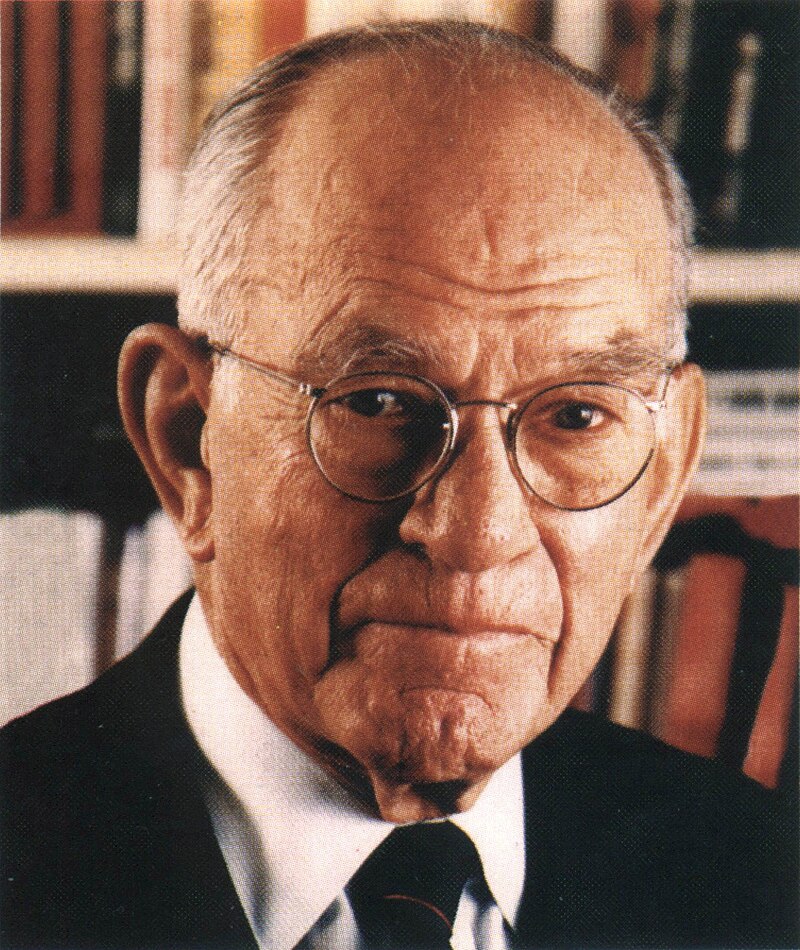
James Fulbright
Rhodes' influence has had an interesting side effect.  One recipient was James William Fulbright (1905-1995) who arrived in Oxford as a Rhodes Scholar – a privilege that he never forgot and emulated.  He was the brainchild behind The Fulbright Program which provides around 8,000 grants annually for students to study in other countries – specifically for United States students to study abroad, and for other countries, in return, to study in America.  Fulbright explained his hopes:

“The Fulbright Program aims to bring a little more knowledge, a little more reason, and a little more compassion into world affairs and thereby increase the chance that nations will learn at last to live in peace and friendship.”

This is an excerpt from two tours:
Oxford’s Noble and Great Ones - Part 1  and
Oxford’s Noble and Great Ones - Part 2  
The full tours can be found on www.obelisktours.co.uk

Wednesday, 20 July 2016

"Literary Links" - The Original Globe Theatre

 "Literary Links" is a series of posts celebrating Britain's wonderful links with great authors, dramatists and poets.

Just one street back from the modern Globe Theatre is the site of the original Globe where so many of William Shakespeare's plays first saw the light of day.

Site of the Original Globe Theatre Plaque


The first of Shakespeare’s plays to reach the stage in the Globe was probably Julius Ceasar.  Eleven other plays were to follow including  Hamlet, Othello, Macbeth and the Tempest before the building burned down in 1613.   That little tragedy was sparked by Shakespeare’s play Henry VIII.  A cannon was shot during the performance and caught the theatre’s thatch alight!  


The Globe was rebuilt only to become a casualty of the Puritans dislike of this evil pastime and the order that all theatres be closed (1642). 

If you look behind the plaque there are a series of historical boards about the Globe and if you peer through the fence you can see where the results of archaeological digs are commemorated with different coloured cobbles. 


This is an excerpt from the tour London River Walks - South Bank which explores the southern bank of the River Thames.  The full tour is found on  www.obelisktours.co.uk

Monday, 18 July 2016

"On the Road..." - London's iconic skate park

"On the road..." is a series of posts about our Discovery of Britain's highways and byways.  Whether it be some family fun, a surprising connection or just a beautiful spot we want to share our love for this country with you.  

Today we visit an iconic skate park in London. 

This southern riverside area is famed for its concerts and theatres, but this spot has also attracted a younger form of entertainment with the evolving of a Skate Park in the undercroft of the Southbank Centre.  For around forty years this undercover area has been the heart of London’s Skateboarders.  In 1976 the skateboarding craze arrived in force from America and this concrete jungle with its walls, slopes and stairs became the perfect place for youth to gather.  At its height around 1,000 skaters would practise along this river front on weekends.   To protect other Thames path users their activity was eventually confined to the undercroft area which became its spiritual home. 


Skaters can be regularly seen wheeling, twisting, jumping and surfing the walls with surprised tourists watching on as clusters of youth hang out and strut their stuff. This all-weather gathering spot is adorned with uncommissioned graffiti which serves as a perfect, colourful backdrop to the skating culture. 

Its irreverent colours, cryptic symbols and loud occupants seem, at first glance, to be unsuitable neighbours to opera, ballet, and theatre.  But this is a classic example of how this wonderful city can cater for all its contrasting ages and interests.  You can find little pockets of other worlds like this around the City. 

Their presence here has not always been welcomed by the Centre’s owners, who have gradually reclaimed a lot of the undercroft for storage.   Then in 2013 word spread that as part of a major upgrade to the area the owners planned to transform the skating area in to coffee shops and restaurants.   It appeared that an eviction was imminent, but this piece of skating heaven did not want to go.  They collected over 150,000 signatures from supporters. 

It has been hailed as an open space which should be protected.   The skate park may not have nice green lawns and pretty statues, but this graffitied, concrete playground is as much loved and cherished by its own unique community.   Supporters have called it the “epicentre of UK skateboarding”, “a sanctuary for skateboarders”, a “symbol of edginess and counter-culture”, “culturally and historically important”, “a free space for people to express themselves”, and “iconic”.


The non-skating purists view it as an eyesore, a waste of valuable commercial space and a carbuncle on the butt of humanity. 

Personally I like it.  Its raw edge jars you, but its youthful passion adds a vibrant touch to the concrete landscape.   To lose this unusual site would be the equivalent in their world to asking Westminster Abbey to relocate because the neighbouring politicians need more office space. 

After 18 months of petitioning and legal wrangling it was announced (September 2014) that the undercroft would be “open for use without charge for skateboarding, BMX riding, street writing and other urban activities".

It feels like an uneasy truce, but for now their skating space is safe.  

This is an excerpt from the tour London River Walks - South Bank which explores the southern bank of the River Thames.  The full tour is found on  www.obelisktours.co.uk

Wednesday, 13 July 2016

"Literary Links" - The Globe Theatre

"Literary Links" is a series of posts celebrating Britain's wonderful links with great authors, dramatists and poets.


Before you stands the beautiful reproduction of the Globe Theatre – one of the most famous theatres in the world.  This is NOT the site of the original Globe Theatre -see next week's post to see that location and learn of Shakespeare's early work.  

In 1949, some 307 years later, the American actor Sam Wannamaker (1919-1993) arrived in London and came on a Shakespearean pilgrimage to visit the great Bard’s famed stomping grounds.  He was astonished to find nothing but a plaque.  Thus the seed was sown in which he fought through apathy, criticism and opposition from councils, English Heritage and even fellow actors to recreate Shakespeare’s famed Globe theatre. 

In 1970 he founded the Shakespeare Globe Trust and began fund raising with all his might.  His vision was to create a faithful reproduction using medieval building techniques and matching the appearance of the original as far as possible.  The oak beamed structure is held together by mortice and tenon joints and 6,000 wooden pegs, plastered in between with a mixture of sand, lime, water and goat hair, and topped off with thatch from Norfolk.


The interior courtyard is open to the heavens, and the ‘groundlings’ still stand for the entire performance.  The following 1599 account compares the original seating and ticket prices,
“Whoever cares to stand below pays only one English penny, but if he wishes to sit he enters by another door, and pays another penny, while if he desires to sit in the most comfortable seats which are cushioned, where he not only sees everything well but can also be seen, then he pays yet another English penny at another door.”  
The seating arrangement is similar today, although you will find the prices have gone up slightly. 
Sam Wannamaker died in 1993, four years before the theatre was completed.  It is rather sad he did not witness the opening of his masterpiece, but he died content knowing the site was secured and building well under way. 

A second theatre, located behind the Globe’s replica, was opened in 2014 and quite fittingly is named in Sam Wannamaker’s honour. 

This Globe Theatre enterprise, along with the Tate Modern has transformed this decaying backwater into a major player on London’s tourism map.  

This is an excerpt from the tour London River Walks - South Bank which explores the southern bank of the River Thames.  The full tour is found on  www.obelisktours.co.uk

Monday, 11 July 2016

"On the Road..." - Gloucester's Anonymous Mail Box

"On the road..." is a series of posts about our Discovery of Britain's highways and byways.  Whether it be some family fun, a surprising connection or just a beautiful spot we want to share our love for this country with you.  

Today we visit Gloucester

In between Gloucester's Cathedral Precincts and King's School you will discover an unusual Royal Mail post box - unusual in that it does not have any markings on the front.  


Post boxes usually have the initials of the reigning monarch when the box was erected clearly displayed on the door.   The oldest red pillar post boxes date from 1852 and have VR for Queen Victoria (1837-1901) engraved on the front – the R is for Regina or Rex – the Latin for Queen or King.   Then in 1879 a series of boxes were produced which have become known as “Anonymous boxes”.  Queen Victoria is not acknowledged!  This practise was rectified in 1892 and the Queen and all subsequent monarchs have their initials depicted including  ER VII (King Edward VII 1901-1910),  GR V (King George V 1910-1936)   ER VIII (Edward VIII 1936), GR VI  (King George VI 1936-1952) and ER II (Queen Elizabeth II 1952-  ?).    The iconic red colour was not standardised until 1874.  Prior to that time no colour was specified - although green was quickly decided as too well camouflaged as people kept bumping in to them. 

This is an excerpt from the tour Gloucester City Tour - Part One which explores the streets around the Cathedral.  The full tour is found on  www.obelisktours.co.uk

Friday, 8 July 2016

"Now Picture That" - Preston - cotton

"Now Picture That" is a series of posts which share old engravings and photos of Britain to help you imagine how things looked in times gone by.  

This print gives a great visual of Preston's cotton factories and chimneys in 1862.  What is more interesting though is the activity in the foreground.

The American Civil War (1861-1865) had a direct impact on Lancashire's economy.  The raw cotton from the American cotton plantations was blockaded which resulted in the shutdown of Lancashire mills who had no raw material to work with.  Thousands of unemployed cotton workers were put back into employment through public work schemes.  This image shows the Preston mill-hands being used to landscape Preston Moor Park.  The park had existed since the 1830s, but had limited public access.  Under this back-to-work scheme there were extensive alterations.
Similar work was done at the same time in the development of two other Preston parks, namely Avenham Park and Miller Park.

Original print has the title: "The Distress in Lancashire - Mill-hands at work on Preston Moor."
From the Illustrated London News, 1862.

Wednesday, 6 July 2016

"Literary Links" - Trolls in the Cathedral!

"Literary Links" is a series of posts celebrating Britain's wonderful links with great authors, dramatists and poets.

Gloucester Cathedral’s Great Cloister is the birthplace of fan vaulting – in which the structure of the ceiling is made of intricately carved ribs resembling a fan.    These cloisters are magnificent - although many younger visitors come here to seek trolls rather than architecture.    


The cloisters were started in 1351 and not fully completed until 1412.  There are over 35 English buildings surviving today with these beautiful fan vaults with some great examples in King’s College, Cambridge, Bath Abbey, Canterbury Cathedral, Westminster Abbey and Christ Church, Oxford. 

For centuries the cathedral reaped the benefits of pilgrims visiting the tomb of King Edward II, but a new type of pilgrim has been added to the guest list. These pilgrims are Harry Potter fans.who come to see the famous vaulted cloisters.   


The first, second and sixth films shot Hogwarts scenes in these cloisters.    Here you will find a corridor from the house of Gryffindor including the door to their common room – where none can pass without giving the correct password to the Fat Lady in the oil painting – played at first by Elizabeth Spriggs and then by our wonderful Dawn French. 


  On these cloister walls were discovered, scrawled in blood, the words “The Chamber of Secrets has been opened.  Enemies of the heir beware.”   These cloisters are also where Moaning Myrtle floods the girls toilets.  Most famously Harry and Ron hide along these corridors as they come to the rescue of Hermione who has been trapped by a vicious troll. 


  They hid in the ancient lavatorium which is also where Harry hears Snape declare he has uttered the unbreakable vow.  

J.K.Rowling's creations have created a unique tourism niche as movie sets for Hogwarts can be found  all over the country including in London, Oxford, Alnwick, Lacock and here in Gloucester.  

This is an excerpt from the tour Gloucester City Tour - Part One which explores the streets around the Cathedral.  The full tour is found on  www.obelisktours.co.uk