Wednesday, 24 August 2016

"Literary Links" - Pirates and Peter Pan.

 "Literary Links" is a series of posts celebrating Britain's wonderful links with great authors, dramatists and poets.

William Ernest Henley (1849-1903) was born in Westgate, and educated at the Crypt School, Gloucester.  At the young age of 19 his left leg was amputated below the knee.  His friend, Lloyd Osbourne, described him as “a great, glowing, massive-shouldered fellow with a big red beard and a crutch; jovial, astoundingly clever, and with a laugh that rolled like music; he had an unimaginable fire and vitality…” 

Now compare that description with this fictional man:
“As I was waiting, a man came out of a side room, ... His left leg was cut off close by the hip, and under the left shoulder he carried a crutch, which he managed with wonderful dexterity, hopping about upon it like a bird. He was very tall and strong, with a face as big as a ham—plain and pale, but intelligent and smiling. Indeed, he seemed in the most cheerful spirits, whistling as he moved about among the tables, with a merry word or a slap on the shoulder for the more favoured of his guests…. And falling on a bench, he laughed until the tears ran down his cheeks. I could not help joining, and we laughed together, peal after peal, until the tavern rang again.”
If you have not guessed already this is describing Long John Silver – one of the main characters in Treasure Island.  Lloyd Osbourne was Robert Louis Stevenson’s (1850-1894) stepson.  After the novel was published in 1883 Stevenson wrote to Henley "I will now make a confession: It was the sight of your maimed strength and masterfulness that begot Long John Silver ... the idea of the maimed man, ruling and dreaded by the sound, was entirely taken from you."

Besides inspiring good pirate material Henley was a respected journalist, poet and editor.  His most famous poem is Invictus the last stanza of which reads:
It matters not how strait the gate,
How charged with punishments the scroll,
I am the master of my fate:
I am the captain of my soul.
Nelson Mandela (1918-2013) used to share this poem with other prisoners as they waited out the apartheid years in Robben Island.

William Henley’s  family went on to inspire yet another fictional character.  A family friend was James Matthew Barrie (1860-1937) who loved Henley’s young Daughter Margaret (1888-1894).   Young Margaret, who died when just six years old, had trouble pronouncing her ‘R’s so when she called Barrie her “Friendy” it became  “Fwendy”.  A few years after Margaret’s death “Fwendy” became ‘Wendy’ in the adventures of ‘Peter Pan, or The Boy Who Wouldn’t Grow Up’ (1904).   

This is an excerpt from the tour Gloucester City Tour - Part One which explores the streets around the Cathedral.  The full tour is found on  www.obelisktours.co.uk

Wednesday, 17 August 2016

"Literary Links" - Harry Potter in Oxford Part 2

"Literary Links" is a series of posts celebrating Britain's wonderful links with great authors, dramatists and poets.

The Harry Potter movies also used Oxford locations in the Divinity School and in New College.

The Divinity School is another of Oxford's great medieval masterpieces with its impressive vaulted roof built between 1427 – 1483.  Beneath this roof is where students once debated with their masters to earn their degrees.   


Harry Potter fans will recognise the Divinity School as both the Hogwarts Hospital and the dance hall where Professor McGonagall attempts to teach the students how to dance.  The ancient library above is used by Harry, Ron and Hermione to find out details about Nicholas Flamel and Polyjuice Potion.  


The cloisters of New College, with the huge tree in the middle, served as the setting for a number of Harry Potter scenes.  It was here that Mad Eye Moody turned Malfoy into a ferret, where pupils wear ‘Potter stinks’ badges, where Harry shares the secret with Cedric Diggory that their first challenge was dragons, and where Harry calls Ron a ‘git’.


This is an excerpt from the self guided tours of Oxford’s Noble and Great Ones.  
The Divinity School is found in Tour Three.
New College is found in Tour Two
The full tours are found on www.obelisktours.co.uk

Wednesday, 3 August 2016

"literary Links" - Harry Potter in Oxford

"Literary Links" is a series of posts celebrating Britain's wonderful links with great authors, dramatists and poets.

A number of Christ Church College locations were used for filming the Harry Potter movies.  
The old cloisters provided the backdrop to Harry being shown his father’s Quidditch trophy.   


The stairway up to the Dining Hall was used as the entrance to Hogwarts where Professor McGonagall informs the new students they are about to be sorted into their houses.  Christ Church decided to not use the Sorting Hat for the selection of their students.  Two other scenes were filmed on this staircase: when Filch, the caretaker, catches Harry and Ron arriving late, and when Harry has a flashback of Dumbledore talking to Tom Riddle.


Even though the Dining Hall was not used for filming it was the inspiration for the Hogwarts’s main hall.  You can easily imagine floating candles, moving pictures, flying owls and hurrying ghosts. 


More Harry Potter, Oxford locations in our next post...

This is an excerpt from the tour Oxford’s Noble and Great Ones - Part 1  which explores around the southern part of Oxford.  The full tour is found on  www.obelisktours.co.uk

Monday, 1 August 2016

"On the Road" - Florence Nightingale Museum

"On the road..." is a series of posts about our Discovery of Britain's highways and byways.  Whether it be some family fun, a surprising connection or just a beautiful spot we want to share our love for this country with you.  


Today we visit the Florence Nightingale Museum in London

Opposite the Houses of Parliament stands St Thomas' Hospital
St Thomas' Hospital
St Thomas’ was named after the martyr Thomas Becket (1118-1170), and was founded around 1173 – although it might have just been a rebranding of an older hospital from 1106.  The original hospital was located further down river and stood near the entrance to London Bridge.    Until the English Reformation (1539) the hospital was run by monks and nuns.

St Thomas' Hospital
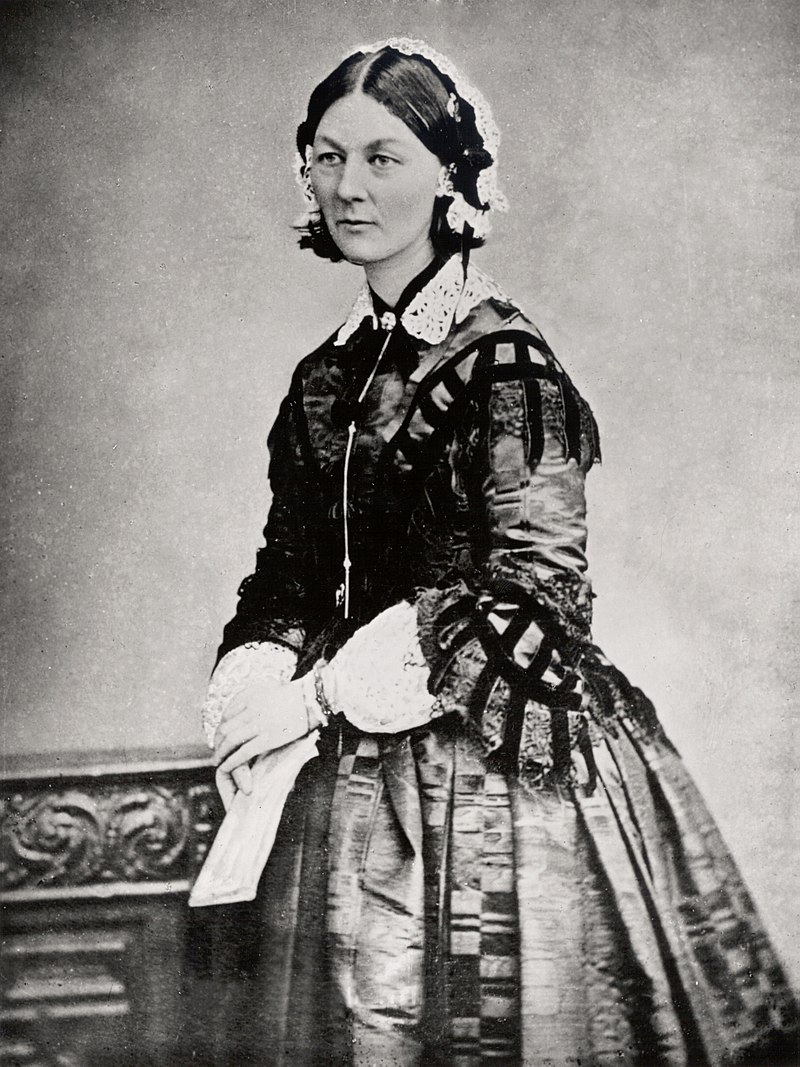
In 1855 Florence Nightingale (1820-1910) in the midst of her life changing experiences in the Crimea - resolved to reform the way nurses were trained.  Her popularity as the “Lady with the Lamp” resulted in impressive fund raising allowing her to found the Florence Nightingale School of Nursing at St Thomas’ in 1860.  

In 1862 the expanding railway network around London Bridge meant the whole hospital needed to move and relocated here.  The foundation stone for the new hospital was laid by Queen Victoria in 1868.    The modern 1975 buildings tend to blot out the more aesthetically pleasing Victorian buildings behind.   


The 1868 portion of St Thomas'

A museum honouring Florence's life and contribution to modern nursing is located just near the main entrance to the current hospital.    The museum contains books and artefacts relating to Florence and nursing including 'Athena' - Florence's bad tempered pet owl who she had stuffed on its death.  

Florence Nightingale three quarter length.jpg
Florence Nightingale
Florence felt her calling to nurse was the divine mission of her life.   She said,
"On February 7 1837 God spake to me and called me to His service."
Other notable quotes of hers include:
"I craved for something worth doing instead of frittering time away on useless trifles."
"When I am no longer even a memory, just a name, I hope my voice may perpetuate the great work of my life.  God bless my dear old comrades of Balaclava and bring them safe to shore."
"It  may seem a strange principle to enunciate as a first requirement in a hospital that it should do the sick no harm."


The area around the museum is explored in our self guided tour of River Walk - Lambeth.  The full tour is found on www.obelisktours.co.uk


Wednesday, 27 July 2016

"Literary Links" - The Tailor of Gloucester

"Literary Links" is a series of posts celebrating Britain's wonderful links with great authors, dramatists and poets.


Beatrix Potter used number 9 College Court next to the Pilgrim’s Arch as an illustration in her children’s story “The Tailor of Gloucester.”    


The story recounts how a very poor tailor sent his cat, Simpkin, to buy a twist of silk to finish a waistcoat for the mayor of Gloucester.  While the cat is gone the tailor discovers some poor mice who have been trapped by the cat.  He releases them and when Simpkin returns he is so mad his mice have gone he hides the twist of silk.    The poor tailor falls ill and the grateful mice help him out by completing the waistcoat – all except for one buttonhole which cannot be completed because there is not enough silk.  The cat repents and retrieves the hidden twist so his master can finish the waistcoat to much acclaim. 


The fun bit about this story is it is based on actual events.  No, there were no amazing cats who could shop and plot nor were there any talented sewing mice, but there was a Gloucester tailor called John Pritchard (1877-1934) whose shop was located at 45 Westgate Street.  In 1894 the mayor commissioned him to make a waistcoat and when Pritchard turned up on Monday morning to start the task he found the waistcoat magically complete except for one buttonhole and a note declaring “no more twist.”    Were there mice or fairies or elves or brownies in his workshop.   No.  At the end of work on Saturday some of his assistants went out on the town and got sloshed.  In a drunken state they spent the night at the workshop and were too dishevelled to be seen in public on the Sabbath.  To make good use of their time they worked on the waistcoat until they ran out of twist on the last buttonhole.  

This is an excerpt from the tour Gloucester City Tour - Part One which explores the streets around the Cathedral.  The full tour is found on  www.obelisktours.co.uk

Monday, 25 July 2016

"On the Road" - Rhodes Scholars


"On the road..." is a series of posts about our Discovery of Britain's highways and byways.  Whether it be some family fun, a surprising connection or just a beautiful spot we want to share our love for this country with you.  

Today we visit Oxford to discover more about Rhodes Scholars

Cecil Rhodes ww.jpg
Cecil Rhodes
Cecil John Rhodes (1853-1902) was English born, but made his wealth and life in South Africa.  He attended Oriel College and loved the University.  He had a very Victorian world view of the British Empire and said "I contend that we are the finest race in the world and that the more of the world we inhabit the better it is for the human race.”   He also said “Remember that you are an Englishman, and have consequently won first prize in the lottery of life.”
Rhodesia was named after him (1895), but in Oxford his best legacy is the Rhodes scholarship which has funded over 7,000 students since 1902.

At the end of South Parks Road in Oxford is the Rhodes House.


In his will Cecil Rhodes created a scholarship programme (1902) which has now assisted over 7,000 international students to come to Oxford.  He felt the university would have a civilising effect and would contribute to world peace.   He said, “Wherever you turn your eye – except in science – an Oxford man is at the top of the tree.”

The list of recipients and their accomplishments is impressive and carry on Rhodes desire to “render war impossible.”

Above the front door is a carved ship with the British lion and the American eagle on the sails.   This is symbolic of Rhodes initial plan for 60 English speaking scholarships from the British Colonies plus another two scholarships for each American state.  There were a further 15 scholarships for Germany.


  The latter might seem an odd non-English connection, but at the time Rhodes had been impressed not only by Germany's might but also that their emperor had made English a compulsory language in German schools.  How his heart would have sank to see what happened during the world wars.  German Rhodes scholars were stopped twice during those two conflicts.  In 1977 women were allowed to apply for the first time and in 1993 countries from the European Community could also apply. 

During their stay Rhodes students are assigned to a College but are also entitled to the use of Rhodes House (1928) which includes facilities such as a Library, study area, and gardens.  It was here that Albert Einstein gave his noted lectures (1931), and where Tony Blair’s band Ugly Rumours played (1970s).  Somehow those two events don’t seem like they should be sharing the same sentence. 
A number of countries have reciprocated in kind by establishing similar scholarships for British students to come to their countries. 
Fulbright.jpg
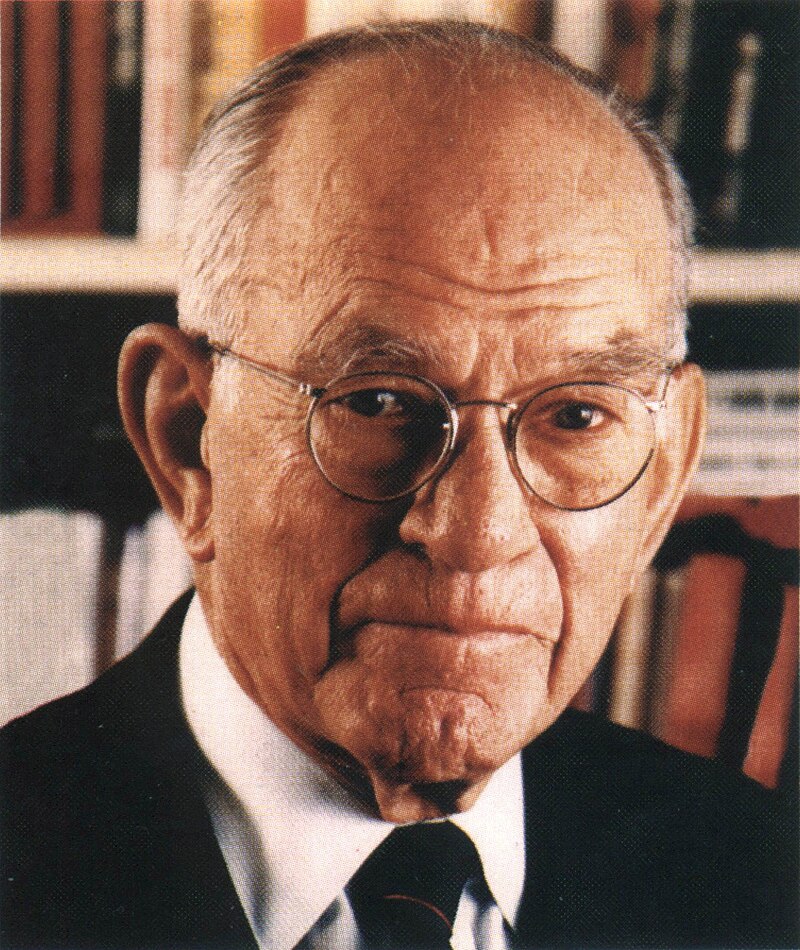
James Fulbright
Rhodes' influence has had an interesting side effect.  One recipient was James William Fulbright (1905-1995) who arrived in Oxford as a Rhodes Scholar – a privilege that he never forgot and emulated.  He was the brainchild behind The Fulbright Program which provides around 8,000 grants annually for students to study in other countries – specifically for United States students to study abroad, and for other countries, in return, to study in America.  Fulbright explained his hopes:

“The Fulbright Program aims to bring a little more knowledge, a little more reason, and a little more compassion into world affairs and thereby increase the chance that nations will learn at last to live in peace and friendship.”

This is an excerpt from two tours:
Oxford’s Noble and Great Ones - Part 1  and
Oxford’s Noble and Great Ones - Part 2  
The full tours can be found on www.obelisktours.co.uk

Wednesday, 20 July 2016

"Literary Links" - The Original Globe Theatre

 "Literary Links" is a series of posts celebrating Britain's wonderful links with great authors, dramatists and poets.

Just one street back from the modern Globe Theatre is the site of the original Globe where so many of William Shakespeare's plays first saw the light of day.

Site of the Original Globe Theatre Plaque


The first of Shakespeare’s plays to reach the stage in the Globe was probably Julius Ceasar.  Eleven other plays were to follow including  Hamlet, Othello, Macbeth and the Tempest before the building burned down in 1613.   That little tragedy was sparked by Shakespeare’s play Henry VIII.  A cannon was shot during the performance and caught the theatre’s thatch alight!  


The Globe was rebuilt only to become a casualty of the Puritans dislike of this evil pastime and the order that all theatres be closed (1642). 

If you look behind the plaque there are a series of historical boards about the Globe and if you peer through the fence you can see where the results of archaeological digs are commemorated with different coloured cobbles. 


This is an excerpt from the tour London River Walks - South Bank which explores the southern bank of the River Thames.  The full tour is found on  www.obelisktours.co.uk